One more step, and clouds lie below.
On an exposed ridge, the next hold is only part of the decision. Read the terrain and keep a way back to shelter.
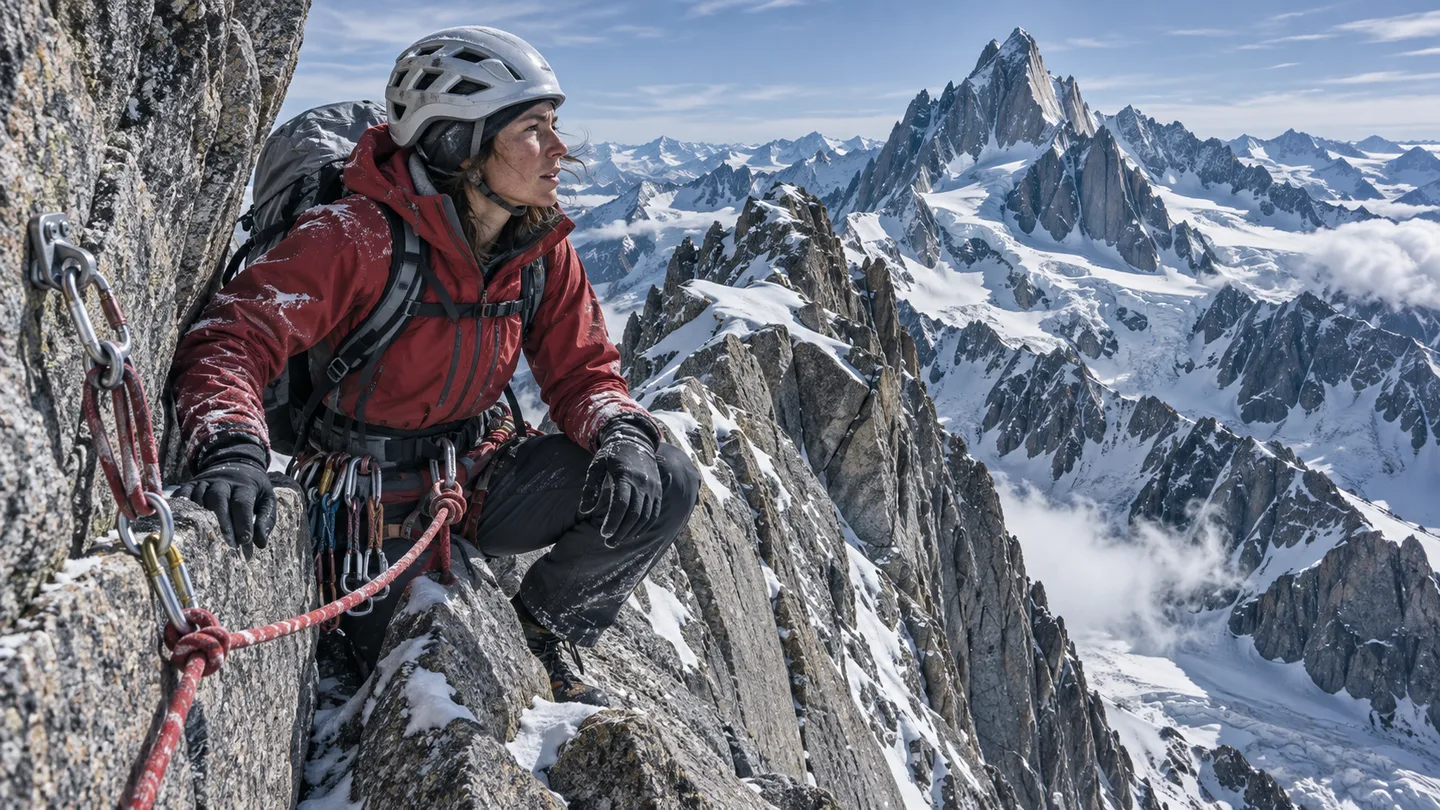
From the next stance, can you still reach your last secure anchor?

On an exposed ridge, the next hold is only part of the decision. Read the terrain and keep a way back to shelter.
From the next stance, can you still reach your last secure anchor?
The exposed slab gives you a choice between a direct seam and a longer traverse closer to protection. From the sheltered notch, look for a visible anchor, changes in the rock surface and the next place you could pause. Those details determine how far you can commit before the way back becomes harder to reach.
The route card keeps the descent in view as conditions change. When the wind rises or the dry seam narrows, record the last safe stance and decide whether the remaining time is enough to cross the upper traverse and return.
Before committing to the upper traverse, stop where the rock gives you cover. From that stance you can see whether the seam is dry, where the next anchor sits and which landmark you would follow back. If wind hides a clue or the footholds disappear into shade, the notch is a place to wait and reassess.
Pick the stance you would retreat to before you pick the next hold.
Every attempt leaves a route note. Keep the time, wind and last secure stance together so the next climb starts with a plan suited to the conditions.
Browse the Expedition NotesA route that looks direct from below can be hard to reverse from the next stance. Peakbud’s alpine game concepts let players read the next protection point, weigh the time remaining and keep an option for descent. The summit is one possible outcome of a route decision. Turning back at the exposed slab is another, and it should be a decision the player can explain.
The notch study follows the same piece of rock in both directions. A feature that is easy to recognise on ascent can disappear during descent, so the return has its own landmarks.
Explore Above the Cloud Line and The Sheltered Notch.